


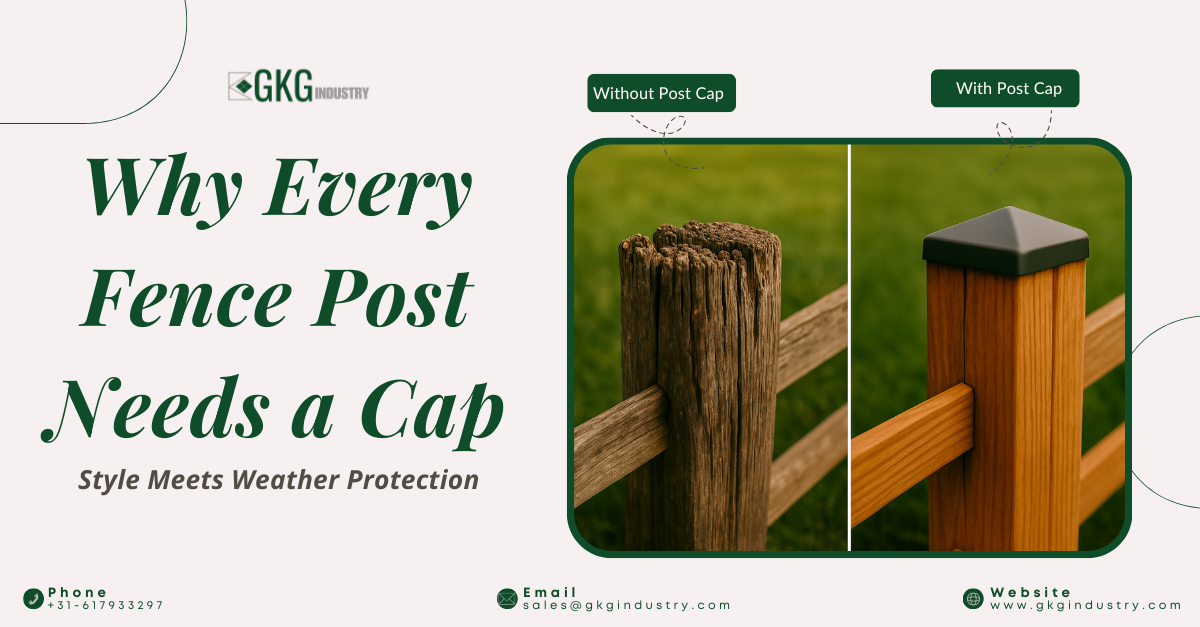
Why Every Fence Needs a Cap: Style Meets Weather Protection
Fence post caps are often treated as a visual afterthought, but professionals know better. They’re not just about looks; they’re a critical barrier against moisture, UV exposure, and decay, especially at the most vulnerable part of any fence: the open post top.
Whether you’re protecting structural steel in a commercial setting or preserving pressure-treated wood in a backyard, post caps are a small investment with long-term payoffs. They help prevent callbacks, warranty claims, and premature replacements; making them a smart detail that every pro should insist on.
And for retailers? They’re one of the easiest upsells with the highest return, especially when presented with the right mix of finishes, fits, and benefits.
What Happens Without Fence Post Caps?
Fence posts, especially wood or hollow metal are vulnerable at the top:
- Water ingress causes swelling, rotting, and corrosion.
- UV exposure degrades the material surface over time.
- Snow, insects, and debris accelerate wear at exposed joints.
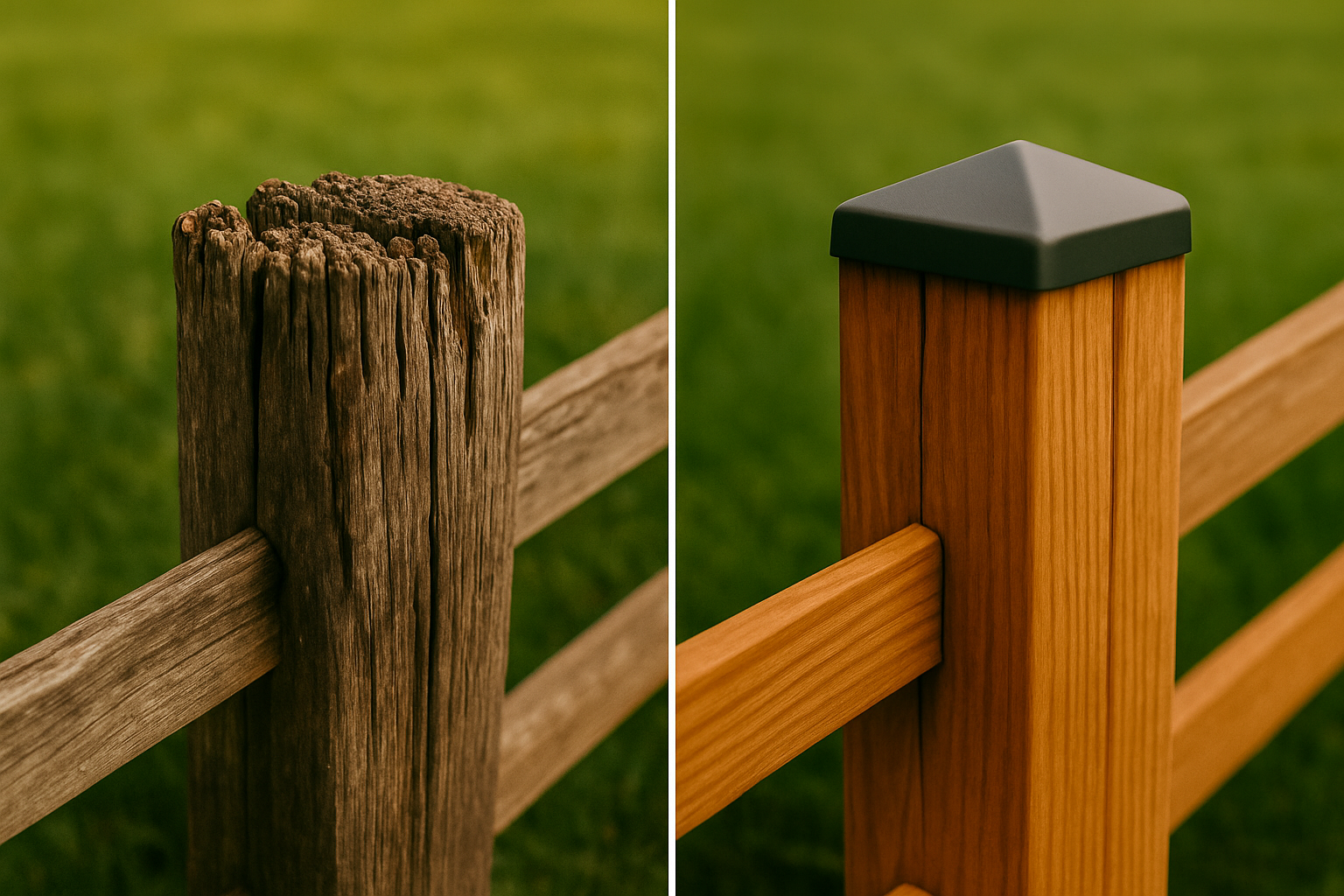
Even treated wood or galvanized steel can fail prematurely without proper sealing. That’s where post caps make the difference- both visually and structurally.
Types of Fence Post Caps by Mounting Technique
Understanding mounting types helps customers and pros choose the right cap for their fence type and installation ease.

1. Press-Fit Post Caps
- How They Work: Simply pushed down onto the post top. Slightly undersized for a snug fit.
- Best For: Wood posts, plastic caps, quick installs.
- Pros: No tools required, easy to replace.
- Cons: Can loosen over time in freeze/thaw climates.
2. Screw-On Post Caps
- How They Work: Fastened directly into the post with screws — usually pre-drilled holes.
- Best For: Metal and hardwood posts, heavy-duty caps.
- Pros: Secure, theft-resistant, windproof.
- Cons: Slightly longer install time, visible screws.
3. Glue-On Post Caps
- How They Work: Adhered using weatherproof construction adhesive.
- Best For: Decorative caps, non-load-bearing aesthetic installs.
- Pros: Clean finish, hidden attachment.
- Cons: Permanent; harder to remove or replace.
4. Internal Mount Caps
- How They Work: Fitted with a peg or insert that slips inside hollow metal or vinyl posts.
- Best For: Aluminum or vinyl fencing systems.
- Pros: Seamless appearance, tamper-resistant.
- Cons: Requires tight internal diameter match.
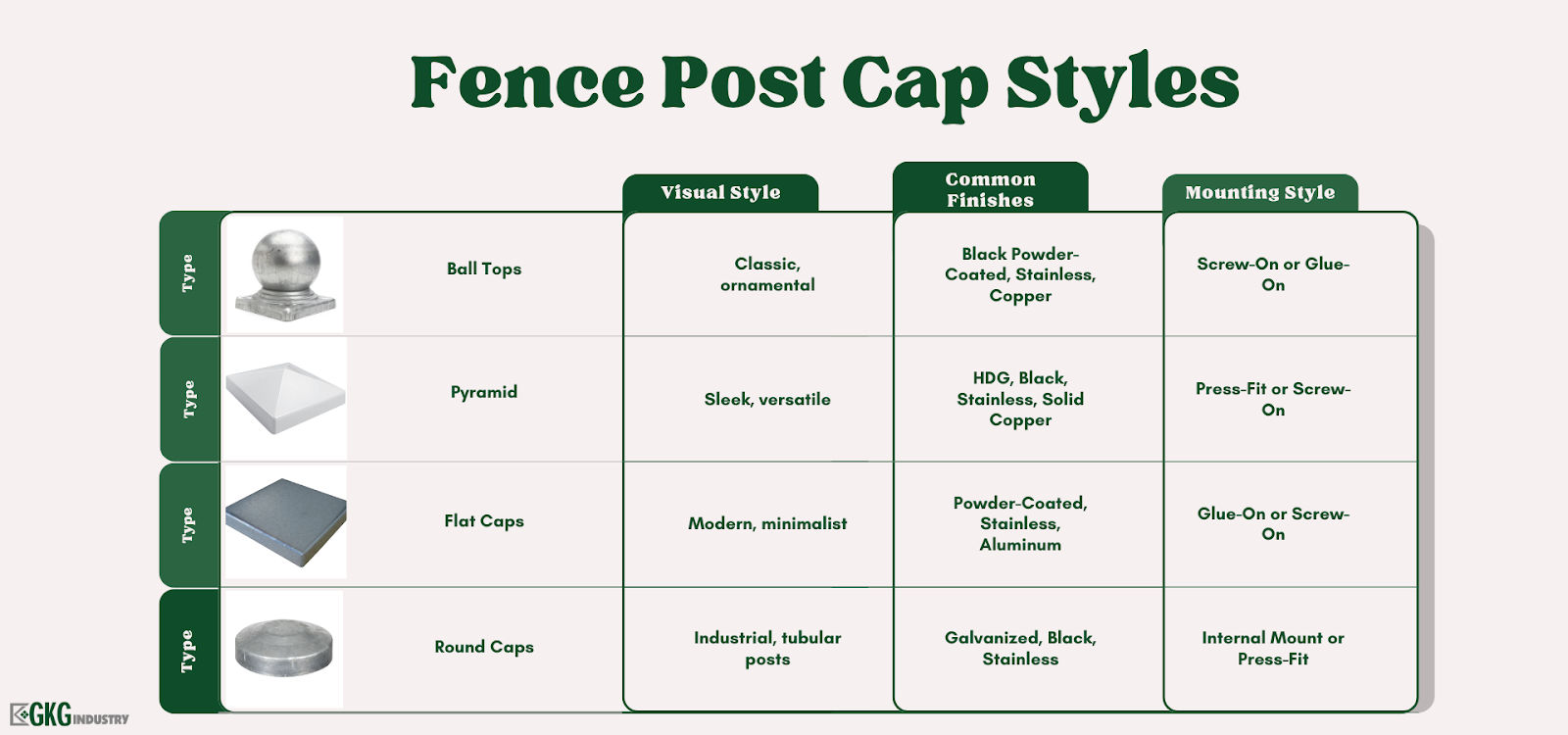
Most Popular Fence Post Cap Styles
Selling Tips for Retailers & Distributors
Retailers often struggle to explain the value of post caps, especially to cost-conscious customers. Here’s how to turn them into high-margin add-ons:
- Use a Visual Demo: Place a rotted wooden post next to a capped one in-store.
- Bundle Smart: Offer “Post + Cap + Anchor” kits as a ready-to-go package.
- Upsell by Finish: Push high-margin finishes like solid copper or brushed stainless to DIYers and landscapers.
- Display Lifetime Value: “This €3 cap can save your €30 post from replacement every 2 years.”
For Architects & Designers: Client Challenges + Workarounds
Design professionals often find themselves needing to convince clients to include fence post caps in the budget.
Common Objections:
- “They’re just decorative.”
- “We’ll add them later if needed.”
- “Won’t the post be fine as-is?”
Your Response Playbook:
- Show before/after photos of aged fences.
- Emphasize patina finishes (e.g., copper) as natural weathering elements that enhance visual appeal.
- Highlight consistency in theme — caps that match gates, railings, or lighting fixtures.
DIY Tips for Homeowners
If you’re building your own fence or replacing old caps:
- Prep the Post: Sand and clean the post top before fitting caps.
- Seal It First: Especially for wood — apply a wood sealer before adding caps.
- Choose the Right Size: Measure internal or external diameter depending on mount type.
- Check Weather: For glue-on caps, avoid wet or freezing days during install.
Fence post caps may be a small component, but they add long-term value to any fencing solution. Whether your clients prefer the elegant contours of ball top caps, the clean geometry of pyramid caps, or the understated form of round caps, offering the right style and finish ensures durability, weather protection, and a professional finish.
At GKG Industry, we supply a wide range of premium-grade post caps in multiple finishes ideal for bulk procurement by retailers, distributors, contractors, and landscaping professionals.
Reach out today to explore how we can support your inventory and project requirements with consistent quality and reliable export service.
