


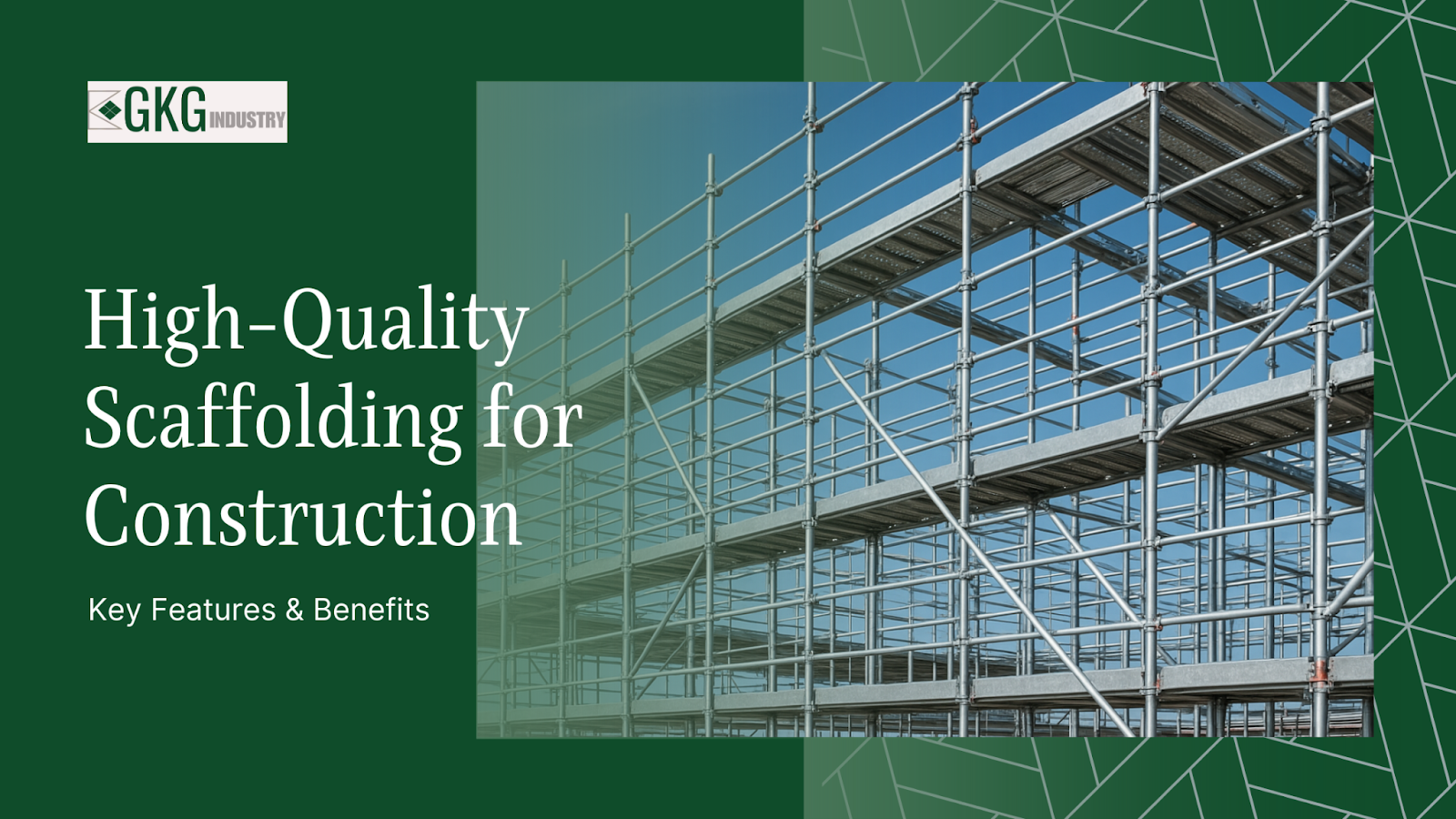
High-Quality Scaffolding for Construction: Key Features & Benefits
Scaffolding and formwork are the unseen frameworks that hold modern construction together. They enable safety, precision, and efficiency on-site: qualities that directly affect timelines, budgets, and outcomes.
For construction suppliers, hardware wholesalers, and large-format DIY stores, understanding what makes scaffolding “high-quality” is essential. It shapes purchasing decisions, inventory planning, and the reliability you offer to builders and contractors.
This article breaks down the core features, benefits, and performance indicators that define high-quality scaffolding systems, while also exploring how formwork suppliers for construction support project efficiency.
Understanding the Role of Scaffolding and Formwork
Scaffolding provides temporary platforms for workers and materials, enabling safe access at height. Formwork, on the other hand, acts as the mold into which concrete is poured, determining the structure’s strength and surface finish.
Together, they are essential tools for every phase of construction, especially in:
- High-rise and infrastructure projects
- Residential and commercial builds
- Renovation and maintenance work
For suppliers, the quality of these products impacts the safety record of contractors, the speed of installations, and ultimately, client satisfaction.
Key Qualities of High-Quality Scaffolding
- Material Strength and Coating
Scaffolding materials should comply with recognized standards such as EN 12811 or BS 1139. Hot-dip galvanized steel offers superior corrosion protection compared to painted or electroplated alternatives. This ensures long-term usability and safety, especially in humid or coastal environments. - Design Precision and Compatibility
Interchangeable components like tubes, ledgers, clamps, and couplers should maintain dimensional accuracy to allow easy assembly and dismantling. Systems like Cuplock or Ringlock have become preferred choices globally for their efficiency and modular design. - Safety and Stability Testing
Every reliable scaffolding manufacturer in India or abroad should perform load, slip, and weld integrity tests. These checks prevent failures that could compromise worker safety or cause project delays. - Ease of Handling and Reuse
Lightweight yet durable designs make transportation and assembly faster. Systems that maintain their strength after multiple reuses offer better long-term value to contractors and distributors alike. - Compliance and Traceability
For European or UK markets, compliance with EN standards and CE marking is increasingly important. A documented quality control process allows wholesalers and store managers to trace each component back to its source, essential for both liability and customer assurance.
Choosing the Right Formwork Supplier for Construction
Formwork quality affects concrete curing, alignment, and finish. For distributors and suppliers, a formwork supplier for construction should be evaluated not just on product range, but on performance over repeated cycles of use.
Key aspects to consider:
- Load-bearing capacity: Can it support the weight and pressure of wet concrete without deformation?
- Reusability: Steel and aluminum formwork panels often offer 100+ reuse cycles.
- Ease of cleaning and maintenance: Smooth-surfaced materials reduce adhesion, speeding up turnaround between pours.
- Modular adaptability: Systems that can handle slabs, walls, and columns improve stock utilization for your clients.
A well-chosen formwork system reduces material waste, lowers labor requirements, and enhances finish quality—all outcomes your customers value.
Benefits for Construction Suppliers and Wholesalers
- Reduced Returns and Quality Claims
Supplying well-manufactured scaffolding and formwork minimizes product complaints and warranty issues. - Inventory Longevity
Durable materials with corrosion resistance stay in stock longer without deterioration, reducing dead inventory loss. - Market Differentiation
Offering components certified to global standards helps position your store or distribution network as a reliable source for professional-grade equipment. - Better Customer Retention
Contractors who experience fewer on-site issues tend to repurchase from suppliers they trust. Quality scaffolding drives that confidence. - Alignment with Sustainability Goals
Reusable steel formwork and galvanized scaffolding support sustainability targets by reducing single-use materials and on-site waste.
Practical Advice Before You Source or Stock Scaffolding
- Request test certificates: Ask for mill certificates, load test reports, and galvanization thickness details.
- Inspect weld quality: Smooth, uniform welds indicate controlled manufacturing processes.
- Check standard compliance: Ensure products align with EN 12810/12811 or equivalent local standards.
- Ask about coating methods: Hot-dip galvanization offers the most reliable corrosion protection.
- Evaluate packaging and labeling: Proper marking ensures traceability for future audits.
Final Thoughts
Whether you’re a scaffolding manufacturer in India exporting to Europe or a distributor sourcing for local markets, the fundamentals remain the same—safety, consistency, and compliance drive long-term success.
In today’s competitive construction supply landscape, formwork suppliers for construction and scaffolding manufacturers who emphasize engineering precision, testing, and durability enable suppliers and store managers to offer more than just products, they provide reliability that builds trust.
By understanding what defines quality, suppliers and retailers can make smarter stocking decisions, reduce risk, and strengthen their relationships with professional contractors and builders.

Author