


Turn Your Store Into a Destination
Price promotions bring people in once. Destinations bring people back.
For construction-material and DIY retailers across the UK and Europe, the most reliable way to grow footfall (and basket size) is to make your shop the place where projects start, skills are learned, and problems are solved. Below is a practical, operations-focused playbook to turn a standard store into a community hub without turning it into a circus.
Why “Destination Retail” Works for DIY & Building Materials
1 Projects are intimidating
Most homeowners and even small traders want reassurance. When your store teaches, demonstrates and advises, you win trust and the sale.
2 Experience beats price
If customers learned the skill in your store or got the job specced by your team, they’ll buy the kit from you- today and next time.
3 Habit creation
A Saturday “Fix-It Clinic” or a Tuesday 7–9 am Trade Hour builds routine traffic. Habits compound.
Workshops: Short, Useful, Repeatable
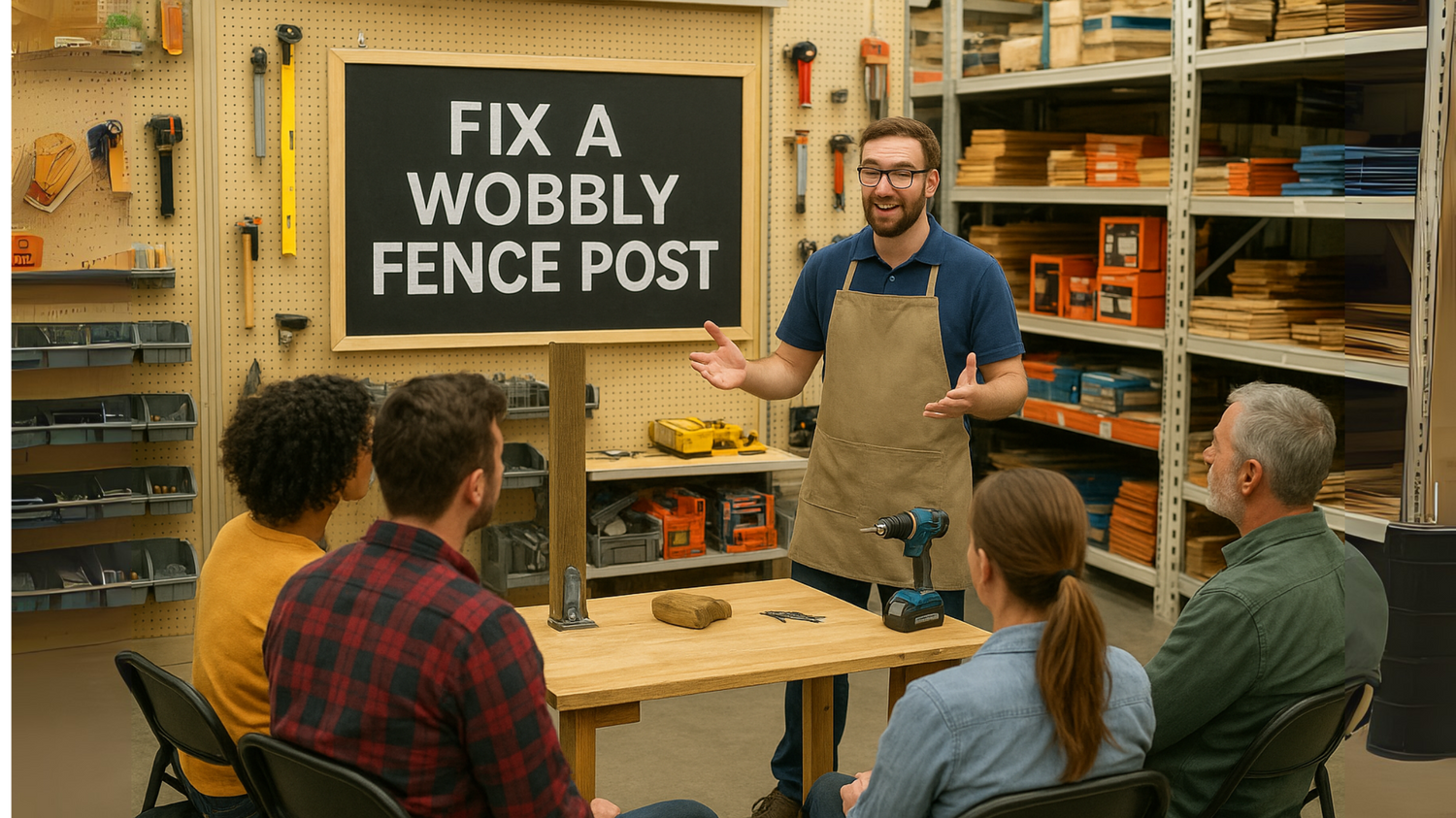
Think 30-45 minutes, hands-on, with a clear outcome. Run them where you can keep trading- end-cap demo bay, front of store, or car-park tent in summer.
High-demand formats for UK/EU:
- Garden & Outdoor: “Set a fence post in 15 minutes,” “Deck maintenance for UK weather,” “Anchoring parasols and rotary airers in windy gardens.”
- Home Repair: “Stop a small leak fast,” “Fix a sagging gate,” “Damp awareness & ventilation basics.”
- Seasonal: “Winterize pipes and outdoor taps,” “Spring garden kick-off,” “Autumn drought-proofing.”
- Tools & Safety: “Cordless basics,” “SDS vs standard- when to use what,” “PPE that actually fits.”
- Trade-friendly micro-demos (10 min): new fixings, faster anchors, cutting services, paint matching.
How to run them well
- One clear promise, one bay of products, one printed kit list.
- Teach by doing: pre-built jig showing a post anchor, demo board for fixings, cutaways of damp membranes.
- End with a confidence check: “Do you know which size/finish you need for your project?”
- Photograph every session; post to Google Business Profile the same day.
Accessibility & compliance
Provide ear/eye protection for attendees, keep barriers around moving tools, record a short risk assessment, and brief staff on manual handling. For under-16s, keep to low-risk demos and obtain guardian consent.
Services: Make Your Counter a Magnet
The best “destination” stores pair workshops with friction-killing services that solve annoying tasks fast.
Core services that pull traffic
- Key cutting & fob copying (fast, high repeat visit rate).
- Timber cutting with a clear pricing board and standard turnaround.
- Paint tinting & colour matching– add a “colour bar” with sample cards.
- Tool hire & returns with a tidy check-in/out desk and SMS reminders.
- Blade/chain sharpening via in-house or partner schedule (collection every Tue/Fri).
- Click & Collect counter or lockers for after-hours pickup near public transport.
- Spec help desk for trades: a quiet bench where staff help build a parts list from drawings.
Community: Earn Local Trust, Not Just Transactions
Destination stores join the local ecosystem.
- Partner groups: allotment societies, Men’s Sheds, resident associations, property managers, schools (bird-box builds), makerspaces.
- Repair & recycle corner: battery and light-bulb recycling, scrap-metal offcuts, “how to dispose” posters that follow local council guidance.
- Local projects wall: showcase customer builds (with permission). It signals pride and starts conversations.
- Trade mornings (7–9 am): coffee, early counter, two 10-minute demos, and a staffer issuing VAT receipts lightning-fast.
Layout: Build a Stage, Not a Bottleneck
- Demo bay: one movable bench with power, extraction if cutting, rubber matting, and a pegboard backdrop for tools.
- Project end-caps: “Fix a Loose Gate,” “Set a Post on Concrete,” “Stop a Draft”- each with a parts kit, QR to a 60-second guide, and a laminated checklist.
- Wayfinding that speaks human: “Build a Deck,” “Seal a Leak,” “Hang It Level” beats generic “Hardware / Plumbing / Timber.”
- Queue intelligence: at tills, stock job finishers (knife blades, pencils, PTFE tape, exterior screws) plus leaflets for next weekend’s clinic.
A Simple 6-Week Pilot Plan
Week 1 – Prep
Choose two workshops, set up demo bay, design one project end-cap, publish dates on Google Business Profile, website, and in-store posters.
Week 2 – Launch
Run “Fix a Wobbly Fence Post” (Sat 11:00). Start key-cutting or paint-matching if not already live. Photograph and post the same day.
Week 3 – Trade Focus
Trade Morning (Tue 7–9 am): coffee, VAT-invoice express, 10-min demo on anchors. Collect business cards → “Trade Tips” email list.
Week 4 – Home Repair
“Stop a Small Leak” demo + project end-cap (PTFE, compression fittings, sealant, gloves). Add a “what size do I need?” chart.
Week 5 – Garden Seasonality
“Set a Post on Concrete” or “Install a Rotary Airer”. Trial a 15-min 1:1 consult slot afterward.
Week 6 – Review & Scale
Evaluate KPIs, refine planograms, and schedule a recurring calendar (two workshops/month, one trade morning/month).
Promotion That Actually Works (and is Free)
- Google Business Profile Posts every week with clear dates/times and a photo.
- In-store aisle talkers: small shelf cards: “Learn this on Saturday… Ask us.”
- Local Facebook/WhatsApp groups: post value first (free clinic), not promo.
- Window board: next three workshops, big, legible from the pavement.
- Email/SMS (consent-based): reminder 24 hours before the session.
Cost & ROI- A Realistic View
Costs: staff hours, demo materials, protective kit, signage, maybe a portable PA.
Returns: higher footfall on event days, bigger baskets through project kits, repeat visits for services (keys, tinting, cutting), and a long-term rise in Google reviews and map visibility.
Track: event attendance, % attendees who purchase, average basket vs store average, review volume after events, and repeat service usage. Over 6–12 weeks you should see steady comp-store growth without leaning on discounts.
Compliance & Good Practice (Quick Checklist)
- Basic risk assessment per demo; barriers around tools; PPE for hosts and attendees.
- Insurance: confirm public liability covers events and tool demos.
- GDPR: explicit consent for emails; no silent opt-ins.
- Photo permissions if you’ll post attendees on social.
- Noise & neighbours: keep cutting and hammering within permitted hours.
The Destination Mindset
Think of your store as the project partner, not just the place that sells parts. When customers learn a skill at your bench, drop off a blade to sharpen, collect a colour-matched tin, or get a VAT invoice in seconds at 7:30 am, they stop price-shopping and start habit-shopping.
Make it easier to learn, easier to finish, and easier to come back- that’s destination retail.
